
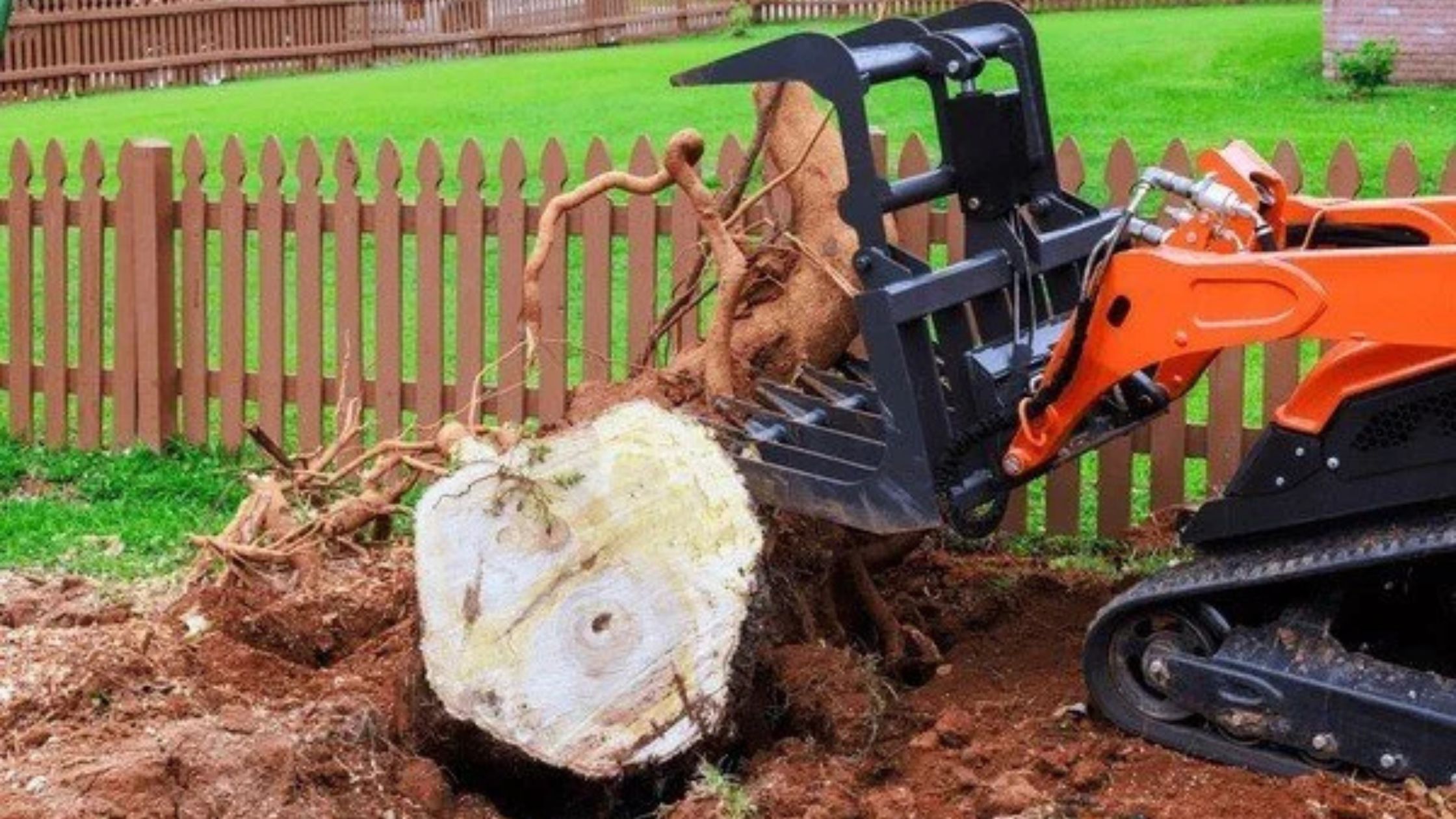
You cut down a problem tree, but the remaining wooden stump sits just inches away from a beautiful maple or a healthy oak. This situation happens all the time in established yards. If you leave the old wood alone, it rots, looks ugly, and brings pests right to your doorstep. Yet, taking a big machine to it risks tearing up the roots of your living tree. It feels like a tough choice between leaving an eyesore or accidentally killing a perfectly good tree. If you are staring at this exact problem, hiring a professional who runs a compact stump grinder tree nearby is the best way to protect your good tree while clearing out the old wood.
To fix this issue, you have to look at what happens under the grass. Tree roots do not just grow straight down like carrots. Instead, they spread out flat and wide, creating a massive, tangled web just a few inches under the dirt. When two trees grow near each other, their roots mix together completely. Pulling, ripping, or grinding one can easily destroy the life support system of the other. Let us look at how you can handle this tricky spot without causing any bad accidents.
The Hidden Underground Network
To solve this problem, you have to realize that the root area of your living tree is very sensitive. The tiny roots that drink water and soak up nutrients live in the very top layer of soil. These small roots spread out far past the tips of the tree branches.
When a stump is close, its old roots are physically tied up with these living lifelines. If you use a lot of heavy force to rip the old wood out of the ground, you will tear the living roots too. This instantly stops the healthy tree from getting enough water, which often makes it look sick and dying by next spring.
Why Pulling the Stump Fails
Using a truck or a heavy digger to yank a stump out by its base is a terrible idea in tight spaces. The raw power needed to pull a buried stump sends heavy shocks through the surrounding dirt.
As the old root ball lifts, it acts like a giant lever, flipping the soil and snapping any living roots caught in the mix. This violent movement can even loosen the grip of the healthy tree, making it easy for a strong wind to blow it over later.
Can You Just Use Chemicals?
Many homeowners buy chemical stump removers to avoid digging. These products are usually made of powders that speed up how fast wood rots away.
While this sounds easy, putting these chemicals right next to a living tree is dangerous. The chemical can wash through the dirt or travel through roots that have fused together, accidentally poisoning your good tree. Plus, letting a large chunk of wood rot slowly over many years creates a home for bad bugs and fungi that can easily move over to the healthy trunk.
What Are the Safest Manual Solutions?
When big machines are too dangerous, switching to hand tools is a smart way to go. It takes more time and muscle, but it gives you total control over every single cut.
- Wash away the topsoil with a garden hose to see exactly where the dead and living roots cross.
- Use a sharp hand saw to make clean cuts on the dead roots while staying far away from the good ones.
- Chop away the inside of the dead stump with a hand axe, leaving the outer edge intact.
- Drill deep holes into the dead wood and fill them with rich soil to help it rot naturally without chemicals.
- Shave the stump down with a small chainsaw until it sits under the grass line, then cover it with mulch.
How Do Professionals Manage Thin Clearances?
Experienced crews treat this problem like a delicate job. Instead of using massive machines that crush everything in sight, they use small, highly mobile gear with sharp, fast-spinning cutting wheels.
A skilled worker can position the wheel to shave the dead wood away bit by bit. They stop just short of the living bark, turning the old stump into harmless sawdust without ever shaking up the dirt or touching the roots of the good tree.
When Should You Consider Total Root Removal?
Sometimes, old roots simply have to go, especially if they are lifting up a sidewalk, patio, or driveway. This requires a completely different type of tool.
Instead of guessing where to cut, specialized teams use strong air tools to blow the dirt away without harming the soft outer skin of the living roots. Once the underground map is fully visible, the dead sections can be safely cut out. If your bricks or paths are buckling from underground growth, searching for expert tree root removal nearby will help you bring in the right tools to clear the path safely.
Frequently Asked Questions
Will the old stump make the living tree sick?
Yes, it definitely can if you leave it there. As dead wood rots, it draws in bad wood-eating fungi. This rot feeds on the dead stump but can easily jump over to the roots of your healthy tree, eventually killing it from the ground up.
How close is too close for standard machinery?
If the dead stump sits within ten feet of the trunk of a healthy, living tree, big digging tools should stay away. Anything inside this zone is part of the critical root circle, meaning hand tools or small, precise grinding tools are necessary to keep the good tree alive.
Practical Steps for Long-Term Safety
Managing a tight removal job requires a careful plan that keeps the surrounding yard safe from start to finish. Following a clear order keeps things running smoothly:
- Look at the branches of the living tree to guess how far the roots spread underground.
- Clear away rocks and low branches to make a safe, open workspace.
- Use a slow, steady grinding method that puts safety ahead of speed.
- Fill the empty hole with a mix of topsoil and compost to help the nearby roots heal.
- Spread a thick layer of wood mulch over the spot to keep the soil moist and cool.
Final Remarks
Fixing these tough yard problems takes the right tools and a lot of local experience. For folks on Martha’s Vineyard dealing with small yards and delicate coastal trees, Bilzerian Tree and Land Services offers the neat, careful help needed to clear away old stumps without hurting the surrounding plants. Their crew stays away from rough, heavy methods that ruin good lawns, choosing careful, low-impact steps instead. From running a precise stump grinder tree nearby to cleaning up the entire yard until it shines, their island team takes care of every single step. Property owners can easily pass these tough outdoor chores over to their experienced hands, keeping the natural beauty of their island homes perfectly safe all year long.