A tree can remain standing after a major storm and still have serious damage. Broken limbs, loose roots, cracks, and weak branches may not be easy to spot from the ground. If you are looking for hazardous tree removal nearby, it is worth having storm-damaged trees checked before assuming they are safe. A tree does not have to fall to become a danger. Some problems can appear days after the storm has passed.
Look Beyond the Fallen Branches
Storm cleanup often starts with what is easy to see. Branches are cleared from driveways, lawns, and walkways. Fallen trees are removed, and the property starts looking normal again.
The standing trees deserve just as much attention.
Strong wind can break large branches without bringing them all the way down. A damaged branch may remain attached but become unstable. Another gust could send it toward a roof, vehicle, fence, or walkway.
Look for:
- Large branches hanging lower than before
- Fresh breaks or cracks
- Loose bark around damaged areas
- Branches caught in other trees
- New leaning around the trunk
- Exposed or lifted roots
- Soil that has shifted near the tree base
These signs do not always mean a tree must be removed. They do mean the tree needs a closer look.
Check the Trunk and Major Branches
The trunk carries most of a tree’s weight, so cracks deserve attention after a strong storm.
A small surface mark may not be serious. A deep split, large crack, or fresh break near a major branch can be a different matter. Damage at the point where a large branch joins the trunk can also weaken the tree.
Do not climb the tree to get a better view. A damaged branch can move without warning, especially during windy weather.
A clear view from the ground can help you spot obvious problems. Serious damage should be checked by a tree professional.
Do Not Forget the Roots
Roots hold a tree in place, but most of them are hidden below the soil.
Heavy rain can soften the ground around a tree. Strong wind can then put extra pressure on the root system. After a storm, look for raised soil, exposed roots, gaps near the trunk, or a tree that appears to have shifted.
A tree may stay upright even after part of its root system has been disturbed. That does not mean the problem has gone away.
Root damage can also make a tree more vulnerable during the next storm. A professional inspection can help determine how serious the issue may be.
Has the Tree Started Leaning?
A natural lean is not always a problem. Many trees grow at an angle and remain healthy for years.
A new lean is different.
Compare the tree with older photos of your property if you have them. A sudden change in its position may point to movement around the roots or damage higher up.
Pay close attention to the soil around the base. Freshly raised soil or exposed roots can provide a clue that the tree has shifted.
Some Storm Damage Takes Time to Show
Not every storm-related problem is obvious right away.
A partially broken branch can become weaker as time passes. A cracked limb may eventually fall. Damaged wood can also become more fragile after the storm.
Another period of strong wind may turn a small problem into a major one.
For that reason, storm cleanup should include a look at standing trees, not just fallen branches. A property may appear clear while a damaged limb remains above a home or other frequently used area.
Avoid Risky DIY Tree Work
Removing a few small branches from the ground may be manageable for some homeowners. Large storm-damaged trees are a different matter.
A broken limb can have a lot of weight behind it. Cutting one section can cause another part to move or fall. Leaning trees can also behave in unexpected ways.
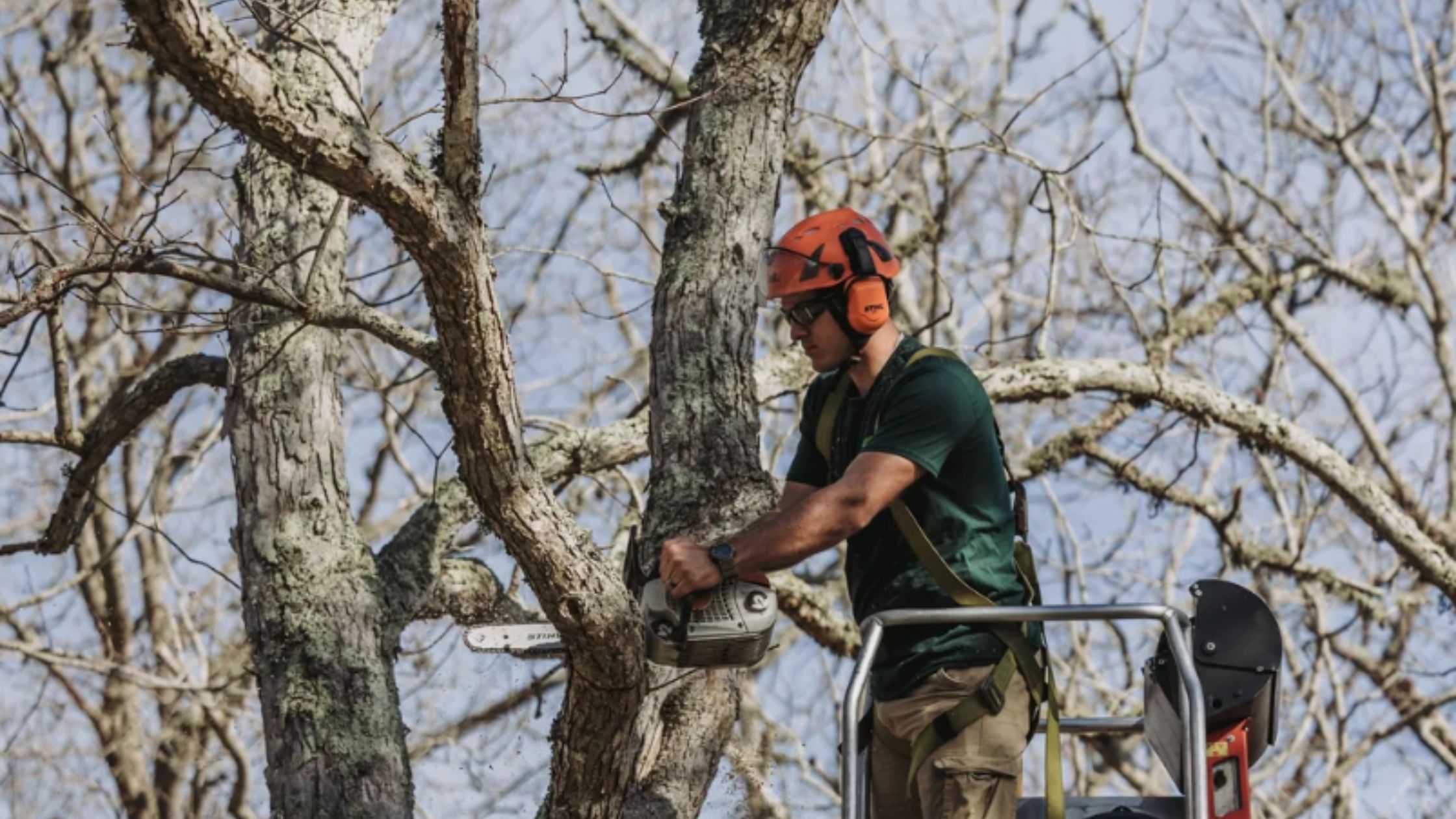
Ladders and chainsaws add more risk, especially around damaged trees.
If a large branch is hanging overhead, a tree is leaning, or the trunk has a major crack, keep people away from the area. Do not try to pull the branch down with a rope or vehicle. Professional tree work is the safer choice for serious storm damage.
What Should a Tree Inspection Cover?
A proper inspection looks at more than one broken branch.
A tree professional can check the trunk, larger branches, branch connections, roots, soil around the base, and the tree’s position on the property. They can also consider what sits nearby.
A tree next to a house needs more attention than a similar tree located far from buildings and regular foot traffic.
The condition of the tree before the storm also matters. Existing dead branches, decay, or earlier damage may affect how well it can handle new storm damage.
The right solution may be pruning rather than removal. Another tree may need to come down because the damage has made it unsafe. Each situation needs to be judged on its actual condition.
When to Call for Professional Help
Call a tree service if you notice a large broken limb, a new lean, major cracks, exposed roots, or a tree that has shifted after a storm.
Keep children and pets away from the area until it has been checked. Avoid parking under damaged branches and stay clear of trees that appear unstable.
Property owners looking for hazardous tree removal near Martha’s Vineyard should not wait for a damaged tree to fall before seeking help. Early attention can make it easier to deal with a problem before it causes damage to the property.
Bilzerian Tree and Land Services for Storm-Damaged Trees
Bilzerian Tree and Land Services provides tree care and property services across Martha’s Vineyard and surrounding areas. Their services include tree removal, pruning, stump grinding, brush cutting, chipping, and other land and property work.
Storm damage can leave behind more than fallen branches. Their team can help property owners deal with damaged or unsafe trees and clear storm debris from the property.
They also have the equipment needed for larger tree and land work, which can be useful when storm damage affects more than one part of a property.
Conclusion
A tree that remains standing after a storm is not automatically safe. Cracks, hanging limbs, exposed roots, new leaning, and shifted soil can all point to problems that deserve attention. A careful inspection can help determine if the tree needs pruning, removal, or continued care.
Bilzerian Tree and Land Services helps property owners address storm-related tree and land problems with practical services suited to the condition of each property. They can assess damaged trees, remove unsafe growth, clear debris, and help keep surrounding grounds in better shape after severe weather.